A buyer touring Downers Grove this fall will see the same phrase on two listings a few blocks apart: walk to the train. One home lists for $850,000. The other, similar square footage, similar year built, lists for $150,000 less. Both agents will tell you it's walkable to Metra. Neither listing tells you which of the three stations they mean, and that omission is doing more to set the price than the kitchen renovation.
Downers Grove is not like most of its DuPage neighbors, which get one Metra stop and call it a day. This village has three: Main Street in the heart of downtown, Belmont to the west, and Fairview Avenue to the east. They sit on the same BNSF line, they show up on the same Metra map, and they are treated by buyers as interchangeable. They are not. Understanding why is the difference between reading a listing correctly and overpaying for a commute you won't actually get.
Three stops, one line, two kinds of service
Main Street is the station Downers Grove built its downtown around. It sits blocks from the Tivoli Theatre and the restaurants along Main and Curtiss, and it is the stop that gets favored treatment on the timetable. Many BNSF trains run express specifically to or from Downers Grove, a scheduling choice designed to move commuters through the busier stations faster during peak hours. Main Street is that busier station. In the most recent full ridership count Metra published before service patterns shifted, taken in 2018, Main Street ranked sixth among the system's 236 non-downtown stations, with roughly 2,492 weekday boardings, evidence of how much of the line's traffic funnels through that one platform.
Belmont and Fairview Avenue do not get the same treatment. They function as local stops for a meaningful share of the schedule, which means a rider boarding there during rush hour is more likely to be on a train making every stop rather than skipping ahead. The difference on paper looks small. In practice it is the gap between a predictable half-hour commute and one that varies by which train happened to be running that morning.
| Station | Location in town | Service pattern |
|---|---|---|
| Main Street | Downtown core | Favored for express runs during peak hours |
| Belmont | West side | Local stop for much of the schedule |
| Fairview Avenue | East side | Local stop for much of the schedule |
None of this shows up in a listing photo. It shows up when you check the actual schedule for the specific address you're touring, not the town in general.
The other line running through town
Here is where the story gets more interesting than a transit schedule. Downers Grove is split between two public high schools, Downers Grove North and Downers Grove South, both part of Community High School District 99. The district maintains an official boundary map, and it is not a formality. Which side of that line a house sits on determines which high school a family's kids attend, full stop.
What buyers moving from Hinsdale or Naperville often assume, reasonably, is that a village this size has one boundary running somewhere convenient and forgettable. What they find instead is that the same rail corridor separating Main Street's express service from Belmont and Fairview Avenue's local service runs close to the same stretch of town that separates the two attendance zones. That is not a coincidence born of urban planning genius. It is what happens when a town grows up along a railroad, and the railroad becomes the spine that later divisions get drawn against.
The practical result: a buyer comparing two houses on either side of that corridor isn't just comparing commute times. They may be comparing school assignments too, on top of the commute difference, in the same transaction. That is a lot of variables hiding behind one line, "walk to Metra." The exact boundary shifts block by block, and CHSD99's own mapping tool is the only reliable way to confirm which school serves a specific address. Anyone who assumes it based on which side of downtown feels closer is guessing.
What the market is actually doing with this right now
None of this would matter much in a flat market. It matters now because Downers Grove is not flat. Through the three months ending May 2026, the median sale price in Downers Grove reached $521,000, up 13.1 percent from the same period a year earlier, with the typical home fielding around four offers and going under contract in about 45 days, according to Redfin's tracking of the local market. Zillow's index showed a similar direction, putting the average home value at $513,663 as of the end of July 2026, up 6.0 percent year over year, with homes moving to pending status in a matter of days rather than weeks.
The first quarter of 2026 told an even sharper story at the closed-sale level. Local MLS data for that quarter showed a median sale price of $607,000, up from $490,000 in the same quarter of 2025, with roughly half of closings landing above the original list price and more than 40 percent going under contract within 10 days. That is not a market where a buyer has room to guess about which station or which school zone a listing actually falls in. Homes priced and marketed accurately are moving fast. Homes that are overpriced or unclear about what they're actually offering sit long enough to lose momentum before eventually closing at a discount, and the gap between median and average days on market in recent local data is itself a clue that both patterns are happening at once.
The house is not the only thing being sold. The train stop and the school zone are baked into the price whether the listing spells them out or not.
Old walkable stock against new construction at the edges
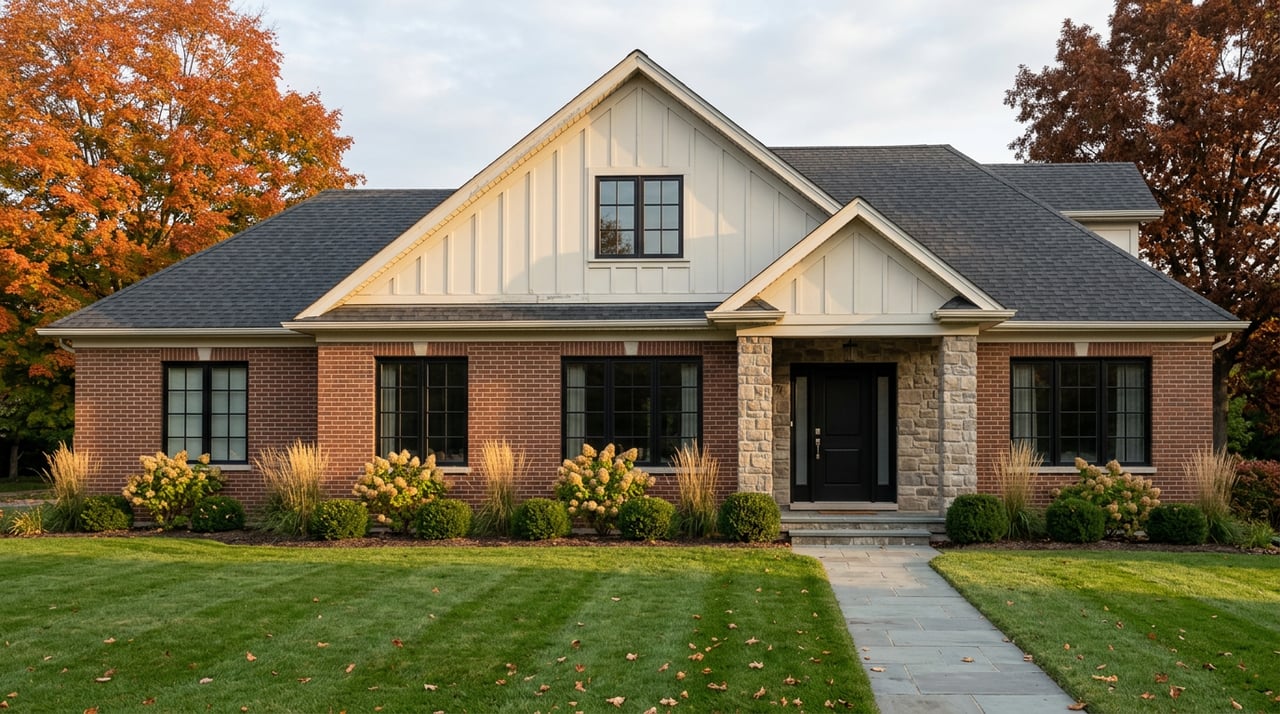
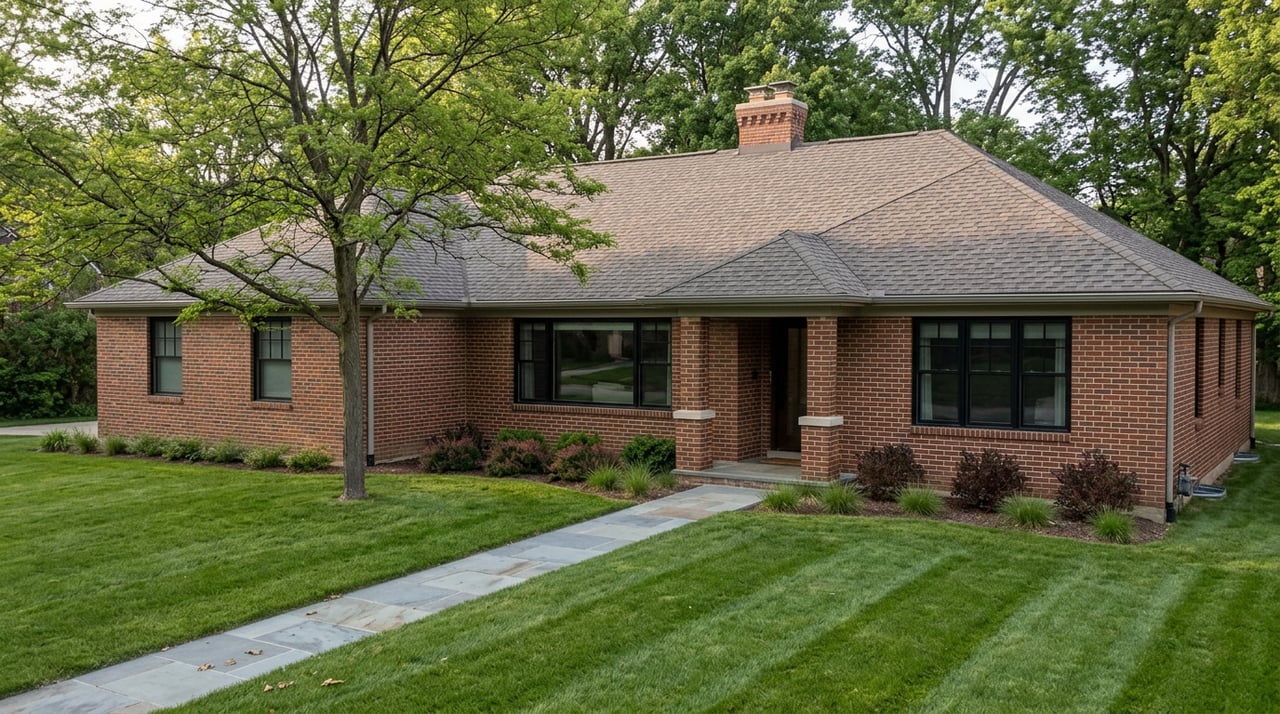
There is a second bifurcation running underneath all of this. Downers Grove's older neighborhoods, many of them clustered closest to Main Street and the downtown core, are seeing steady teardown and remodel activity, with buyers paying a premium for updated homes on small, walkable lots. At the same time, new construction has been going up on the town's edges, including the Talon Reserve subdivision on the northeast side, where finished homes have been pricing well into seven figures as land and construction costs have climbed.
That split matters for anyone weighing tradeoffs. A buyer chasing walkability and the express platform is competing for a shrinking supply of updated older homes close to downtown. A buyer willing to trade walking distance for new construction and a larger lot has a different, less crowded lane, but a longer or less certain commute depending on which of the three stations ends up being the practical option.
Reading a Downers Grove listing the way a local would
Before touring, or before writing an offer, a few questions turn a vague phrase like "close to Metra" into an actual answer:
- Which of the three stations is actually the closest walk, Main Street, Belmont, or Fairview Avenue?
- Does that station's schedule favor express trains at the hours you'd actually be commuting?
- Which side of the CHSD99 boundary does the address fall on, confirmed through the district's own mapping tool rather than assumed?
- Is the home in one of the older, smaller-lot neighborhoods near downtown, or nearer the newer construction on the town's edges?
- Has the seller's agent specified travel time to Union Station, or just distance to a platform?
None of these questions require special access. They require knowing that the questions exist, which is the part a portal listing rarely tells you.
A few questions worth asking before you tour
Does the express schedule hold up all day, or just during rush hour? The favorable treatment Main Street gets is concentrated around peak commute times. Midday and evening service tends to look more similar across all three stations, so a buyer whose schedule doesn't match the 7 to 9 a.m. and 4 to 6 p.m. windows may find the practical difference smaller than expected.
Is the school boundary the same as it was a few years ago? District boundaries can shift. The only current answer is the one on CHSD99's own map, checked against the specific address, not a neighbor's experience from a prior year.
Does new construction near the edges fall within a reasonable walk of any station? Generally no. That is the tradeoff buyers in those newer subdivisions are making deliberately, space and finish level over walkability, and it is worth going in with eyes open rather than discovering it after closing.
Downers Grove rewards the buyer who asks which station, which side of the boundary, and which train actually runs on time. If you are comparing this market against Hinsdale, Western Springs, or Naperville and want a straight answer about what a specific address actually buys, Kathy Szuba can walk through the schedule, the boundary, and the comps together. Start with a free home valuation, and bring the address.